
How to Read a PSA Pop Report (With Examples)
Learn how to read a PSA population report: total graded, pop at grade, pop higher and gem rate, with real 1986 Fleer Jordan and Luka examples.
The PSA population report ("pop report") is one of the most useful free tools in the hobby, and one of the most misread. It tells you how many copies of a card PSA has graded at each grade. Used well, it shows how scarce a high grade really is, how hard a card is to grade, and whether supply is growing. This guide explains how to read a PSA pop report, with real examples from the 1986 Fleer Michael Jordan, Luka Doncic and Victor Wembanyama.
What a Pop Report Shows
For each card, PSA's population data lists:
- Total graded: every copy of that card PSA has graded, across all grades.
- Population by grade: how many copies received each grade, from PSA 1 to PSA 10, including half grades and qualifiers.
- Pop higher: how many copies graded above a given grade. For a PSA 9, that is the number of PSA 10s.
PSA's Auction Prices Realized pages pair each grade's population with recent prices. For the 1986 Fleer Jordan, a snapshot of that page listed a PSA 10 population of 326 next to its most recent PSA 10 price.
Read a Pop Report in Six Steps
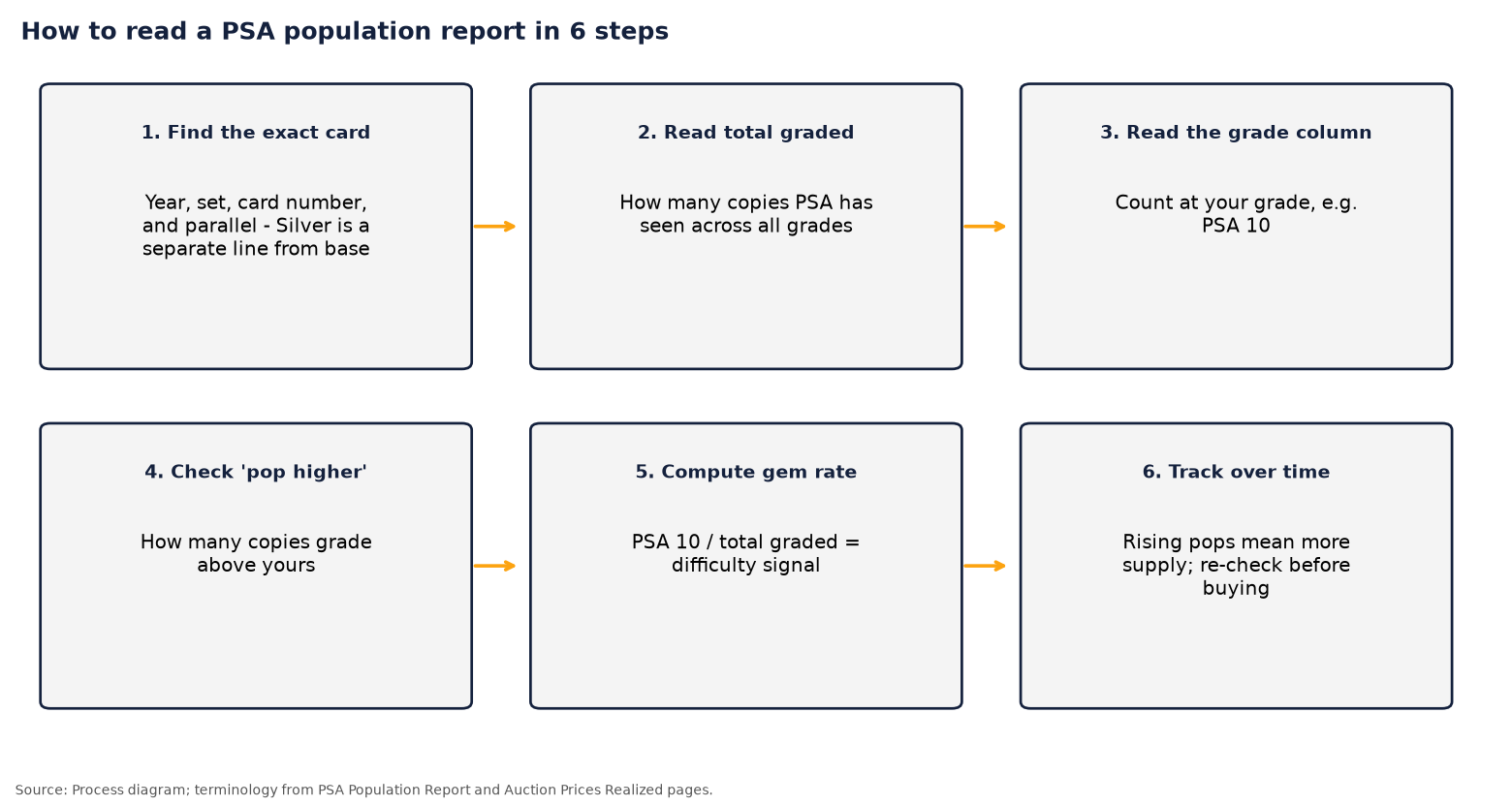 Figure 1: A six-step method for reading any PSA population report.
1. Find the exact card
Search by year, set, card number and parallel. On Luka's 2018-19 Prizm, the base rookie and the Silver are separate lines. Graded Card Investor counted more than 36,000 PSA-graded base Luka Prizm rookies, compared with 5,174 Silvers.
2. Read the total graded
This tells you how many copies are in PSA slabs, not how many exist. Many copies stay raw or sit in BGS or SGC holders.
3. Read the grade column you care about
If you are buying a PSA 10, note the PSA 10 count. For the Luka Prizm Silver, it was 2,253 in late 2023.
4. Check "pop higher"
For a PSA 9 buyer, pop higher is the number of 10s. A PSA 9 with thousands of 10s above it is worth much less than a PSA 9 that is the highest grade any copy has received.
5. Calculate the gem rate
Gem rate = PSA 10 count ÷ total graded. It is a quick measure of how hard a card is to grade.
6. Track it over time
Populations rise as people submit more cards. A static pop on an old card suggests that most good copies have already been graded. A fast-rising pop on a new card means more supply is coming.
Example 1: The 1986 Fleer Michael Jordan
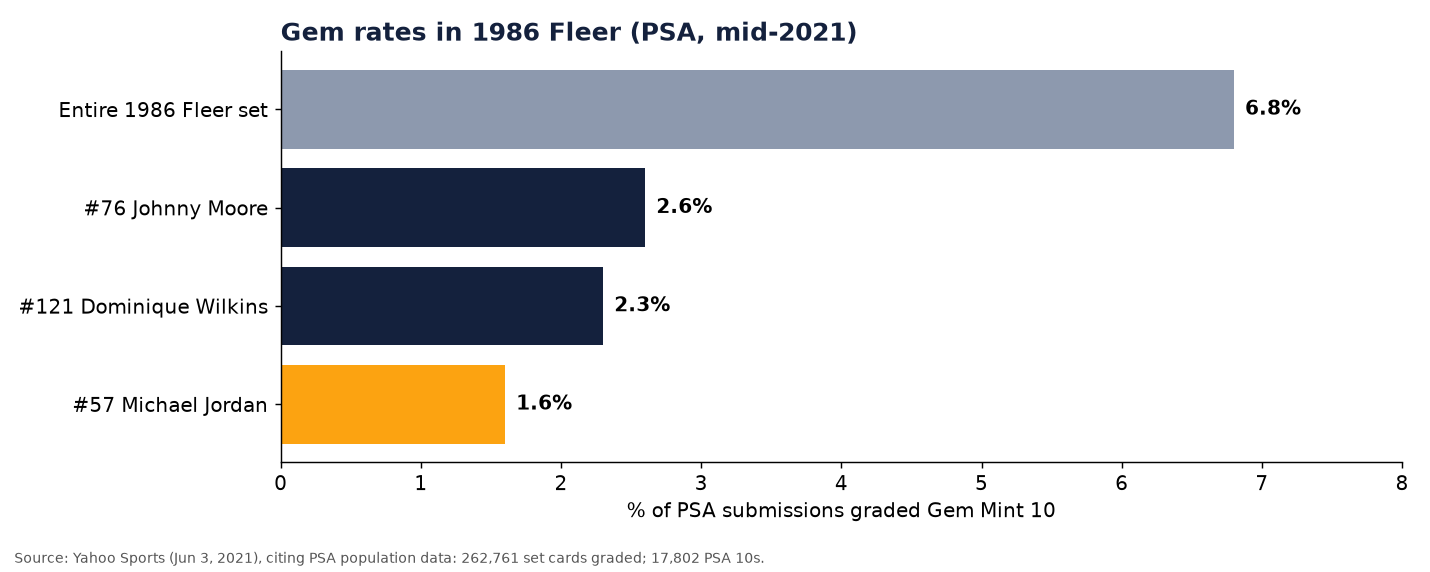 Figure 2: Gem rates in 1986 Fleer, as reported by Yahoo Sports using PSA data (June 2021).
Yahoo Sports analyzed PSA data for the full 1986 Fleer set in June 2021:
- 262,761 cards from the set had been graded, and 17,802 (6.8%) received a PSA 10.
- The Jordan #57 had a gem rate of just 1.6%: 317 PSA 10s out of 19,567 graded.
- Only Dominique Wilkins (2.3%) and Johnny Moore (2.6%) came close to that difficulty.
How to read it: the Jordan is not rare in total (nearly 20,000 graded), but a PSA 10 is very rare. Over time, the PSA 10 count barely moved: Sports Collectors Digest counted 320 by September 2023 from more than 23,000 submissions, and a later PSA APR snapshot showed 326. Thousands of new submissions added only about nine 10s. That stability helps explain why the PSA 10 has held a large premium. See the 1986 Fleer Jordan value guide.
Example 2: Luka Doncic Prizm Silver vs Optic Holo
| Card | Total graded | PSA 10 | Gem rate |
|---|---|---|---|
| 2018-19 Prizm Silver #280 | 5,174 | 2,253 | ~43.5% |
| 2018-19 Optic Holo #177 | 948 | 324 | ~34.2% |
Source: Graded Card Investor, late 2023.
How to read it: modern chromium cards gem far more often than 1980s cardboard. The Prizm Silver's 43.5% gem rate is about 27 times the 1986 Fleer Jordan's. A PSA 10 on a modern card is common, so price depends more on demand than on grading difficulty. Note too that the Optic had both fewer total copies and a lower gem rate, yet it sold for less than the Prizm. Demand outweighed scarcity. See Prizm vs Optic.
Example 3: Victor Wembanyama Prizm Silver
Card Ladder listed a PSA 10 population of 5,284 for the 2023-24 Prizm Silver Wembanyama in October 2026. It tracked 194 sales in three months. A large, liquid pop like this behaves more like a traded market than a scarce collectible: prices move quickly on news, and there is always a copy for sale.
Common Pop Report Mistakes
Treating total graded as total existing
Pop reports cover only one grader's slabs. Raw cards and other graders' slabs are not included.
Ignoring crossovers and resubmissions
The same physical card can be counted more than once if it was cracked out and resubmitted, unless the submitter asked for the old cert to be removed. That can inflate pops, especially for valuable cards.
Comparing across graders without adjusting
A PSA pop and a BGS pop are separate. BGS also reports Black Labels separately from Pristine 10s. See BGS Black Label explained.
Focusing on pop and ignoring demand
A low pop does not guarantee value. Demand for the player and the card drives price.
Using stale data
Pops change. Always check the live report before you buy.
How Pop Data Fits Into Pricing
Use the pop report together with sales data:
- Pop at grade and pop higher tell you how scarce your card is.
- Recent realized prices tell you what that scarcity is worth today.
- Pop growth tells you whether supply pressure is building.
For long-term holding, also read investing in basketball cards. For what each grade means, see the PSA grading scale explainer.
FAQ
What does "pop" mean in sports cards?
It is short for population: how many copies of a card a grading company has graded at each grade.
What is "pop higher"?
The number of copies graded above a given grade. For a PSA 9, pop higher is the number of PSA 10s.
What is a good gem rate?
It depends on the era. In mid-2021, the 1986 Fleer Jordan's PSA 10 rate was 1.6%. The 2018-19 Luka Prizm Silver's was about 43.5% in late 2023.
Does a low pop mean a card is valuable?
Not by itself. Scarcity helps, but demand for the player and the card decides the price.
Can pop reports be wrong?
They can be inflated by resubmissions and crossovers, and they leave out raw cards and other graders' slabs. Treat them as strong guides, not exact counts.
How often should I check a pop report?
Check it right before any significant purchase or sale, and every few months for cards you hold. On new releases, populations can change quickly as submissions return. On older cards such as 1986 Fleer, changes are usually small.
Where do I find PSA population data?
PSA publishes population data on its website, and each card's Auction Prices Realized page shows the population at each grade alongside recent sale prices.
Related Articles (Internal Links)
- 1986 Fleer Michael Jordan Rookie Card Value Guide
- PSA Grading Scale Explained: 1 to Gem Mint 10
- Prizm vs Optic: Which Basketball Cards Hold Value?
- Luka Doncic Rookie Cards: The High-End Buyer's Guide
- Investing in Basketball Cards: Risks and Real Returns
Sources
- Yahoo Sports, "Has the bubble burst on Michael Jordan's iconic 1986 Fleer rookie card?" (Jun 3, 2021). https://sports.yahoo.com/nba-has-the-bubble-burst-on-michael-jordans-iconic-1986-fleer-rookie-card-152457795.html
- Sports Collectors Digest, "Top 10 Michael Jordan cards for collectors" (2023). https://sportscollectorsdigest.com/news/michael-jordan-top-trading-cards-fleer-rookie-card-value-upper-deck-autographs
- PSA, Auction Prices Realized: 1986 Fleer Michael Jordan #57. https://www.psacard.com/auctionprices/basketball-cards/1986-fleer/michael-jordan/299576
- Graded Card Investor, "Best Luka Doncic Rookie Cards - Recent Prices & Value" (late 2023). https://gradedcardinvestor.com/top-20-luka-doncic-rookie-cards-to-buy-now/
- Card Ladder, 2023 Prizm Victor Wembanyama Silver #136 PSA 10 card page (accessed Oct 16, 2026). https://www.cardladder.com/ladder/card/2023-prizm-victor-wembanyama-silver-136-psa-10
- Sports Illustrated Collectibles, "20 Million Cards Were Graded In 2024". https://www.si.com/collectibles/20-million-cards-were-graded-in-2024
- Beckett News, "Introducing BGS Black". https://www.beckett.com/news/introducing-bgs-black/
Figures are reported prices from the cited sources at the time of research (October 2026). Private-sale prices are as reported and were not independently audited. Nothing here is financial advice.