
PSA Grading Scale Explained: 1 to Gem Mint 10
The PSA grading scale explained from PSA 1 to Gem Mint 10: centering rules, qualifiers, no-grade codes, autograph grades and what they mean for value.
PSA is by far the largest card grader. Sports Illustrated reported that it graded 15.34 million cards in 2024, so its 1-to-10 scale works as the hobby's common language. In high-end basketball cards, one point on that scale can mean hundreds of thousands of dollars. This guide explains each PSA grade, the centering limits PSA publishes, qualifiers and "no grade" codes, and how grade affects price on cards like the 1986 Fleer Michael Jordan.
The PSA 1–10 Scale at a Glance
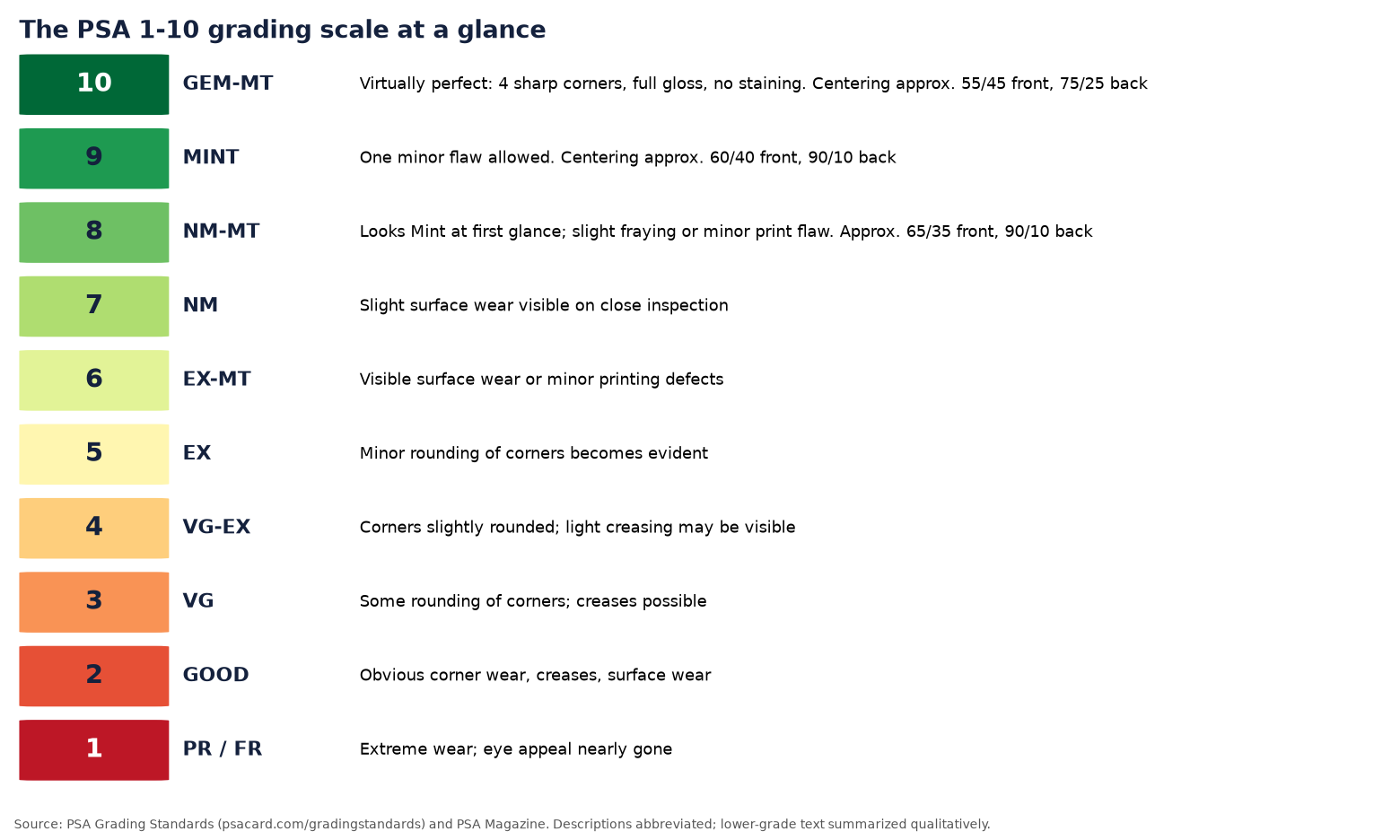 Figure 1: The PSA grading scale. Centering figures come from PSA's published standards. Descriptions are abbreviated.
| Grade | Label | Key standard (abbreviated) |
|---|---|---|
| 10 | GEM-MT | "Virtually perfect": four sharp corners, sharp focus, full original gloss, no staining. Centering about 55/45 or better on the front and 75/25 on the back. |
| 9 | MINT | Superb condition with one minor flaw allowed. Centering about 60/40 front, 90/10 back. |
| 8 | NM-MT | Looks Mint at first glance but may show slight fraying or minor print flaws. About 65/35 front, 90/10 back. |
| 7 | NM | Slight surface wear visible on close inspection. |
| 6 | EX-MT | Visible surface wear or minor printing defects. |
| 5 | EX | Minor corner rounding becomes evident. |
| 4 | VG-EX | Slightly rounded corners, light creasing possible. |
| 3 | VG | Some corner rounding, creases possible. |
| 2 | GOOD | Obvious wear and creasing. |
| 1 | PR/FR | Heavy wear; eye appeal nearly gone. |
PSA also gives half-point grades in the middle of the scale. PSA's Auction Prices Realized page for the Jordan rookie lists sales of PSA 7.5 and PSA 8.5 copies, for example.
What PSA Graders Look At
Centering
PSA measures how evenly the image sits within the borders, both left-to-right and top-to-bottom. For a PSA 10, the front can be no worse than about 55/45 and the back about 75/25. PSA notes that graders may allow "a small variance" based on eye appeal.
Corners
Corners must be perfectly sharp for a 10. Slight fraying is consistent with an 8, and visible rounding pushes a card into the 5–3 range.
Edges
Chipping, roughness and notching all count against the grade. This is a major issue on cards with colored borders such as 1986 Fleer.
Surface
Gloss, scratches, print defects, staining and creases. A PSA 10 must be free of staining, though PSA allows "a slight printing imperfection" if it does not hurt overall appeal.
Eye appeal
PSA's standards say grading has a subjective element: "What will the market accept for this particular issue?" A borderline card can be bumped up or held back based on overall look.
Qualifiers: When a Card Gets a Grade With an Asterisk
PSA can add a qualifier to a grade when one specific flaw would otherwise drag the card down. PSA's standards list the MK (marks) qualifier for cards with writing, ink or pencil marks. Other well-known qualifiers cover off-centering, staining, print defects, focus problems and miscuts. A qualified grade, for example "PSA 8 OC," almost always sells for less than an unqualified grade at the same number.
"No Grade" Codes: Why a Card Comes Back Unslabbed
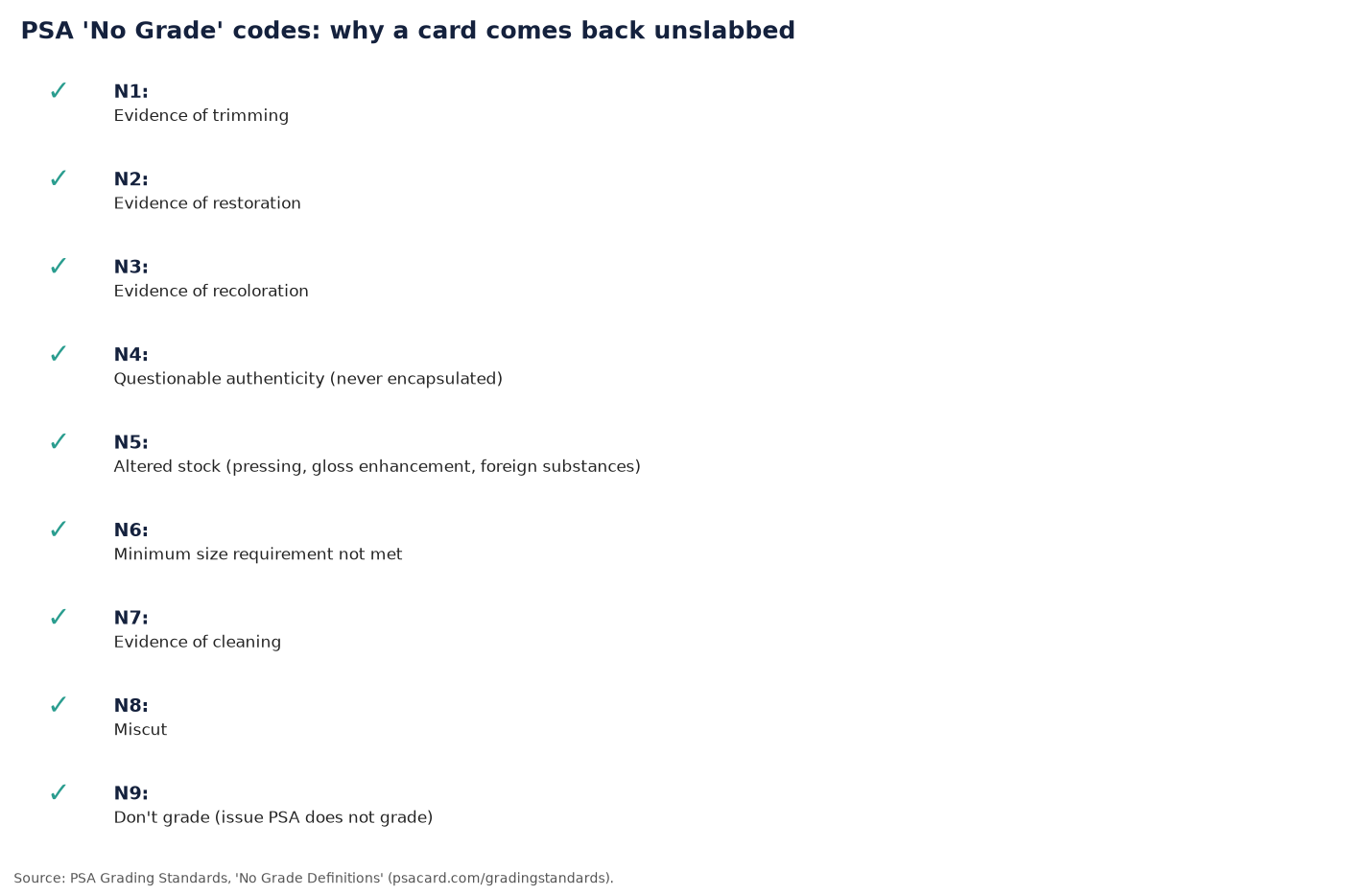 Figure 2: PSA "No Grade" codes, from PSA's grading standards.
PSA states that it "will not grade cards that bear evidence of trimming, re-coloring, restoration, or any other forms of tampering, or are of questionable authenticity." The codes are:
- N1 Evidence of trimming
- N2 Evidence of restoration
- N3 Evidence of recoloration
- N4 Questionable authenticity (never encapsulated)
- N5 Altered stock, such as crease pressing, scratch removal or gloss enhancement
- N6 Minimum size requirement not met
- N7 Evidence of cleaning
- N8 Miscut
- N9 Don't grade (an issue PSA does not grade)
Some altered cards can be encapsulated as "Authentic Altered" at the grader's discretion if the submitter requests it. These codes are your first line of defense against doctored cards. See how to spot fake graded cards.
Autograph Grades
On signed cards, PSA can grade the autograph separately from the card. For example, the Kobe/LeBron Dual Logoman that sold for $6.5 million at Alt in September 2026 was described as PSA 8 with a 10 autograph grade in sales reporting. At the high end, a strong autograph grade adds value, and a weak one can cut it.
How Much Does One Grade Point Matter?
The 1986 Fleer Michael Jordan shows the gap clearly. A PSA 10 has sold for as much as $840,000 (PWCC, July 2021). PSA's APR snapshot listed recent eBay sales of PSA 8s around $7,000–$8,000 and PSA 7s around $5,000 in early 2025. That makes a PSA 10 worth many times a PSA 8. Scarcity drives the gap: in June 2021, only 317 of 19,567 graded Jordans (about 1.6%) had earned a 10 (Yahoo Sports). Read more in our 1986 Fleer Jordan value guide and our pop report guide.
At the 1/1 level, grade matters much less. The record $12.932 million Jordan/Kobe Logoman is a PSA 6.
PSA 10 vs PSA 9: What Actually Separates Them
- Centering: about 55/45 for a 10 compared with about 60/40 for a 9 on the front.
- One flaw: a PSA 9 allows a single minor flaw, such as a slight wax stain on the back, a minor print imperfection or slightly off-white borders.
- Gloss and focus: a 10 needs full original gloss and sharp focus.
On modern chromium cards, the 9-versus-10 decision often comes down to surface print lines and centering.
Tips for Using the PSA Scale When Buying
- Read the full label, including qualifiers and any autograph grade.
- Inspect centering yourself. Two PSA 10s can look very different, and buyers sometimes pay a premium for better-looking copies within the same grade.
- Check the population at your grade and above.
- Verify the cert on PSA's website before you pay.
- Do not assume a resubmission will go up. Grading involves judgment, and results can go either way.
Comparing graders? See PSA vs BGS vs SGC and BGS Black Label explained. Planning to submit? Start with how to grade basketball cards.
FAQ
What does PSA 10 Gem Mint mean?
A virtually perfect card: four sharp corners, sharp focus, full original gloss, no staining, and centering of about 55/45 or better on the front and 75/25 on the back.
What is the difference between PSA 9 and PSA 10?
A PSA 9 allows one minor flaw and looser centering (about 60/40 on the front). A PSA 10 must be essentially flawless.
Does PSA give half grades?
Yes. Half-point grades such as PSA 7.5 and 8.5 appear in PSA's own auction price data.
What does N1 mean on a PSA return?
Evidence of trimming. PSA will not grade a card that appears to have altered edges.
Is a PSA 6 worth anything at the high end?
It can be. The record $12.932 million Jordan/Kobe Dual Logoman is graded PSA 6. For 1-of-1 cards, scarcity and subject matter far more than grade.
Related Articles (Internal Links)
- PSA vs BGS vs SGC: Best Grader for Basketball Cards
- BGS Black Label: What It Is and Why It Sells
- How to Grade Basketball Cards: Is It Worth It?
- How to Read a PSA Pop Report (With Examples)
- How to Spot Fake Graded Cards and Altered Slabs
Sources
- PSA, "Grading Standards". https://www.psacard.com/gradingstandards
- Sports Illustrated Collectibles, "20 Million Cards Were Graded In 2024". https://www.si.com/collectibles/20-million-cards-were-graded-in-2024
- Basketball Card Insider, "25 Most Expensive Basketball Cards Ever Sold" (verified Sep 25, 2026). https://www.basketballcardinsider.com/top-basketball-card-sales-all-time
- PSA, Auction Prices Realized: 1986 Fleer Michael Jordan #57. https://www.psacard.com/auctionprices/basketball-cards/1986-fleer/michael-jordan/299576
- Yahoo Sports, "Has the bubble burst on Michael Jordan's iconic 1986 Fleer rookie card?" (Jun 3, 2021). https://sports.yahoo.com/nba-has-the-bubble-burst-on-michael-jordans-iconic-1986-fleer-rookie-card-152457795.html
- Sports Illustrated, "One of A Kind Kobe and LeBron Dual Logoman Autograph Card Sets New Sales Record" (Sep 26, 2026). https://www.si.com/collectibles/one-of-a-kind-kobe-lebron-dual-logoman-autograph-card-sets-new-sales-record
- Auction Report, "PWCC Marketplace Sells 1986 Jordan Fleer Rookie PSA 10 For $840,000" (Jul 19, 2021). https://www.auctionreport.com/pwcc-marketplace-sells-1986-jordan-fleer-rookie-psa-10-for-840000/
- ESPN, "'Holy grail' Jordan-Bryant sports card sells for record $12.9M" (Aug 2025). https://www.espn.com/nba/story?_slug_=holy-grail-jordan-bryant-sports-card-sells-record-129m&id=46061949
Figures are reported prices from the cited sources at the time of research (October 2026). Private-sale prices are as reported and were not independently audited. Nothing here is financial advice.